

Social bingo: why gaming communities are driving growth again
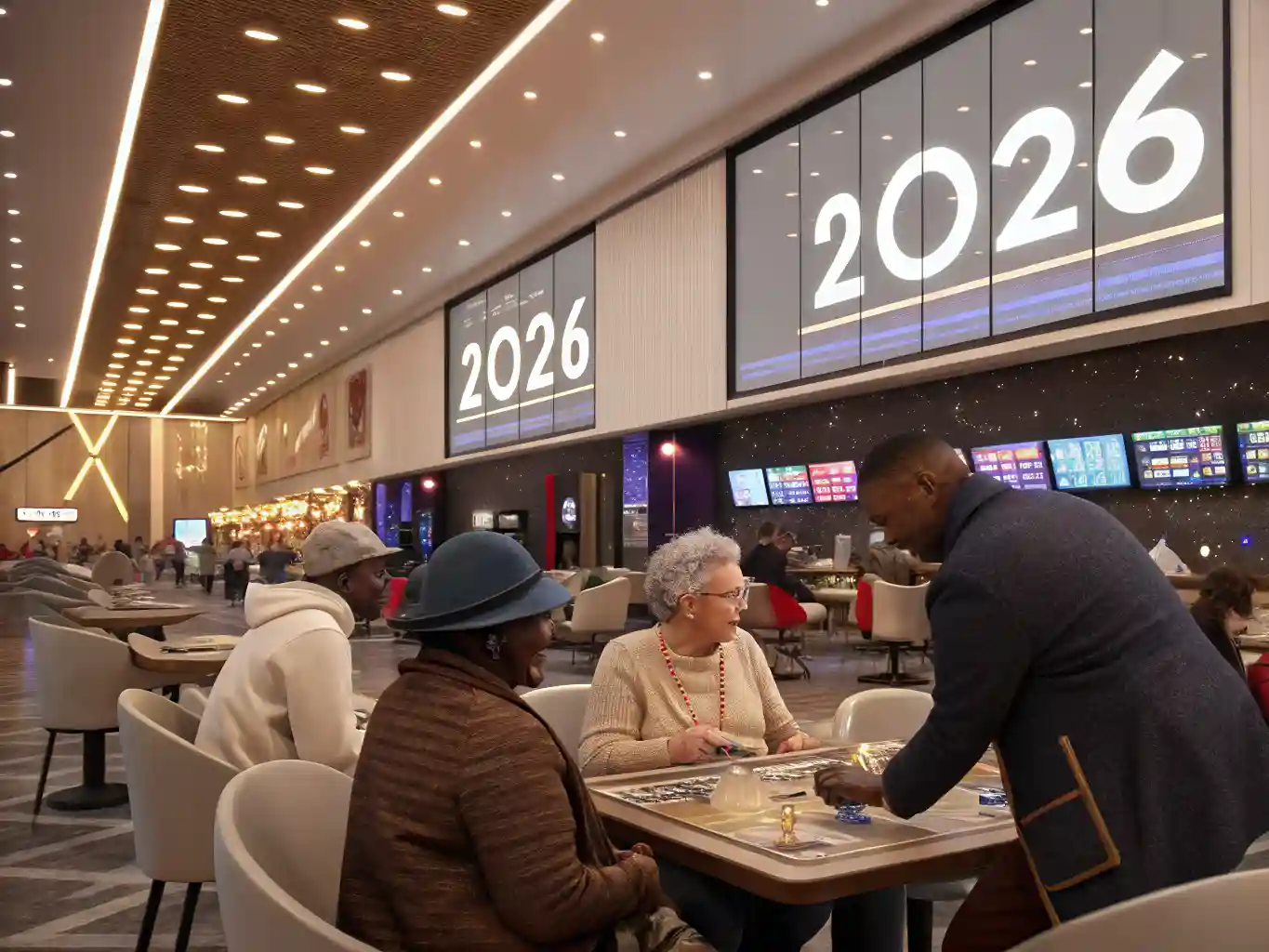
Social bingo is having a surprisingly strong moment, and the reason goes far beyond nostalgia. The format sits at the intersection of simple gameplay, low-friction social interaction, and the kind of community energy that many digital products struggle to build from scratch. In a market where user acquisition is expensive and attention is fragmented, products that can create routine, belonging, and shared emotion tend to win for longer. Social bingo is doing exactly that.
For a while, the wider games industry treated community as something secondary: a useful layer, but not the core engine of retention and revenue. That view now feels outdated. The strongest growth stories increasingly come from products that give people reasons to return not only for progression or rewards, but for other people. Social bingo has become a good example of this shift because it turns a familiar game into a social habit. It is easy to understand, easy to join, and surprisingly effective at creating recurring interaction between players who may have started as strangers but quickly begin to behave like members of a club.
What makes this especially important now is the broader climate around digital entertainment. Players are more selective, ad costs remain high, and many teams are discovering that scale without loyalty is fragile. A product can buy installs, but it cannot buy genuine attachment at the same rate. Communities, when they are real and well-supported, solve a problem that performance marketing cannot solve on its own. They create reasons to stay, reasons to invite others, and reasons to care. Social bingo is benefiting from that change because it is built around a structure that naturally supports rituals, conversation, light competition, and a sense of shared presence.
The return of simple social play
A major part of social bingo’s renewed momentum comes from how well it fits the current mood of players. Not every user wants high cognitive load, endless systems, or competitive stress. Many people want entertainment that feels welcoming the moment they open the app. Social bingo delivers that with unusual efficiency. The mechanics are simple enough to feel familiar within minutes, yet the experience can remain fresh when layered with events, collection systems, team mechanics, and community-driven routines.
That matters because ease of entry has become more valuable, not less. As platforms become crowded and users try dozens of products in short periods, the products that explain themselves quickly gain an advantage. Social bingo does not ask players to learn a difficult ruleset before they can enjoy themselves. It gives them a straightforward loop and then lets the surrounding social layer deepen the experience over time. This structure lowers the barrier to first engagement while still leaving room for long-term retention.
The return of simple social play is also connected to the way digital leisure now overlaps with emotional needs. Many users are not only looking for distraction. They are looking for low-pressure connection, a sense of routine, and familiar spaces they can come back to. Social bingo often functions less like a conventional game and more like a social venue with game mechanics attached. The rounds, chats, clubs, gifting systems, and timed events create a rhythm that feels communal rather than purely transactional.
This is a meaningful advantage in a market where many products are polished but emotionally thin. A beautifully designed interface can attract attention, but it rarely creates loyalty on its own. Community features, by contrast, can transform a modest game loop into something people identify with. That is why older, simpler formats can suddenly outperform more technically ambitious products. If the emotional design is stronger, the total value of the experience can feel much higher.
Social bingo is also benefiting from a wider cultural shift toward formats that are watchable, shareable, and easy to talk about. The suspense of close calls, the familiarity of near-wins, and the celebratory tone of communal success all generate moments that people naturally want to react to. These moments may seem small in isolation, but in aggregate they create the feeling of a live environment. That feeling is difficult to manufacture and extremely valuable when it happens consistently.
Why community now matters more than features
For years, many game teams competed by piling on features. More systems, more progression layers, more monetization hooks, more event types. That approach still has value, but it is no longer enough. In many categories, feature parity arrives quickly. Once multiple products offer the same broad set of tools, the question changes. The key issue becomes not what the product contains, but how people feel while using it and whether they form social bonds around it.
Community answers that question better than almost any feature stack can. When players build relationships inside a product, the cost of leaving rises in a way that cannot be replicated through content alone. A user may exhaust a reward track or pause a spending cycle, but they are far less likely to disappear if their friends, team, or regular chat group remain active. This is why community is not merely an add-on. It changes the economics of retention.
Social bingo is particularly effective here because the social layer fits the product naturally. In some genres, social tools feel bolted on, as if the team added a guild system because every other product has one. In social bingo, collective energy feels native to the experience. The game format already supports shared anticipation and shared celebration. That makes it easier for designers to build systems that players actually use instead of systems that exist only in the menu.
Several community-driven mechanics explain why this matters so much for growth:
- Clubs and groups give players a stable identity inside the product.
- Gift systems create small but frequent moments of reciprocity.
- Live events turn individual play into shared attendance.
- Chat and reaction features make emotional moments visible.
- Team goals encourage retention through collective progress.
Each of these mechanics does more than increase engagement in the short term. Together, they create a social fabric. Once that fabric exists, growth becomes less dependent on constant paid reactivation because existing users begin to sustain one another. People remind each other to join events, help each other during temporary shortages, and celebrate milestones in ways that keep the environment feeling active even between major content drops.
This is one reason social bingo has become strategically interesting again. It demonstrates that the strongest growth loops often emerge when community mechanics support the product’s emotional core rather than distract from it. Many products build communication tools. Fewer build a setting where communication feels useful, natural, and rewarding. Social bingo often does.
There is also a trust factor at work. Players are generally more willing to spend time and money in an environment that feels inhabited by real people and governed by familiar social norms. Community presence softens the impression of a purely extractive system. It makes the product feel more alive, and often more generous, even when monetization remains active. That perception can significantly improve both retention and conversion.
How social bingo creates sticky daily habits
The strongest digital products rarely rely on one big reason to return. They create multiple small reasons that overlap until routine forms. Social bingo is excellent at this. A user may come back to claim a reward, check whether their group completed a goal, join a live session, respond to gifts, finish an event track, or simply spend a few minutes in a familiar room. None of these actions needs to be large to be effective. The power comes from repetition and emotional predictability.
Habit formation in social bingo is not only mechanical. It is social and temporal. Certain users show up at certain times. Certain rooms become familiar. Certain groups develop expectations around participation. This transforms return behavior from isolated usage into something closer to attendance. The player is not merely opening an app; they are returning to a place where they know what kind of interaction awaits them.
Before looking at the main habit-forming drivers in more detail, it helps to compare how community-led growth works differently from feature-led growth in this category.
| Growth driver | What it gives players | Why it improves retention | Business effect |
|---|---|---|---|
| Simple game loop | Fast understanding and low pressure | Makes re-entry easy after a break | Stronger top-of-funnel conversion |
| Clubs and teams | Belonging and shared identity | Players feel expected and recognized | Higher daily return rates |
| Gifting systems | Small acts of support | Builds reciprocity and routine | Better long-term engagement |
| Live events | Shared urgency and excitement | Creates punctual moments to come back | Stronger peak activity windows |
| Chat and social reactions | Emotional visibility | Turns solo moments into group moments | Higher session depth |
| Collection and progression layers | Medium-term goals | Gives structure between social events | Better monetization support |
What this table makes clear is that growth in social bingo is rarely driven by a single pillar. The best-performing products combine accessibility with social reinforcement. A player can drift away from a progression target, but it is harder to ignore a group that notices their absence or an event that everyone is talking about. This is where the category becomes more powerful than its surface simplicity suggests.
Another reason these daily habits stick is that the emotional stakes remain comfortable. Social bingo does not usually demand intense mastery or create harsh penalties for missing time. That makes it easier for users to maintain the relationship over weeks and months. They do not need to feel highly competitive to remain engaged. They only need to feel connected, lightly invested, and welcomed back.
This softer form of retention is underrated. Many teams assume that only high-intensity engagement creates durable value, yet fatigue often breaks those loops. Social bingo works differently. It invites repeat play without making every session feel like work. That balance is useful in a world where users increasingly protect their time and avoid products that feel too demanding.
The category also benefits from what might be called visible momentum. When users log in and immediately see activity, rewards flowing, club progress, or a live room full of reactions, the product feels current. That sense of now is important. Dead spaces weaken habit. Visible activity strengthens it. Community systems help produce that activity at scale because users are contributing to the feeling of motion even when the central game loop remains simple.
The emotional mechanics behind retention and spending
A common mistake in discussions about game growth is to separate emotion from monetization, as if one belongs to design and the other to business. In practice, the two are deeply connected. People spend more comfortably in products where they feel safe, familiar, and socially anchored. Social bingo is strong on all three fronts, which helps explain why its community systems are not only good for retention but also supportive of revenue.
Emotional mechanics in social bingo are subtle. The product does not need to deliver dramatic story arcs to generate attachment. Instead, it relies on repeated low-intensity emotional cues: recognition, anticipation, mild suspense, celebration, generosity, and shared routine. These cues may appear lightweight compared with more cinematic forms of game design, but their cumulative effect can be very strong. Players return because the environment feels good to be in.
Recognition plays a larger role than many teams realize. When a player’s contribution matters to a group, when their presence is acknowledged, or when their progress is visible to others, their activity starts to carry social meaning. This shifts the product from a disposable pastime to a place where their participation has weight. That shift is important because people are far more loyal to spaces where they feel seen.
Anticipation is another major driver. Timed events, recurring rooms, streak systems, and group challenges all create future-oriented attention. The player begins to think not only about what is happening now, but about what they do not want to miss next. When this anticipation is social, it becomes stronger. Missing a reward is one thing. Missing a shared moment with familiar people feels different.
Generosity also matters. Gift exchanges and mutual support mechanics may look simple, but they build social texture. They create a low-risk way for players to interact without needing deep conversation or strong pre-existing relationships. This is one reason social bingo can convert casual users into community participants so effectively. It gives them a socially meaningful action that is easy to perform.
These emotional systems also support spending because they frame purchases within continuity rather than interruption. In many games, monetization appears as a friction point: the system blocks progress, then offers a solution. In social bingo, spending often sits closer to enhancement. Users may buy to stay active in events, support their group participation, sustain momentum, or extend the pleasure of a session that already feels socially rewarding. The tone matters. Spending in a positive emotional environment tends to feel less adversarial.
There is another commercial advantage here. Community tends to improve tolerance for fluctuations in content cadence. A product with weak social foundations must constantly produce novelty to stay relevant. A product with strong community can remain vibrant even during quieter content periods because users continue to create value for one another. That does not remove the need for content, but it reduces the pressure to rely on content alone as the primary retention engine.
For operators and product teams, the lesson is clear: emotional design is not a soft extra. It is core infrastructure. If community features are treated only as decorative additions, the product leaves growth on the table. If they are designed as systems that shape identity, routine, and mutual recognition, they can strengthen nearly every major business metric.
Why community-led growth outperforms pure acquisition
Paid acquisition still matters, but its limitations are becoming more obvious. It can create awareness, stimulate volume, and fill the top of the funnel, yet it does not guarantee staying power. When acquisition costs rise and creative performance becomes harder to sustain, the quality of the post-install experience becomes decisive. This is where community-led growth gains a practical advantage over pure acquisition strategy.
Community-led growth works because it compounds. A paid campaign can bring users into the product once. A well-designed community can make those users invite others, return more often, and remain active for longer. That does not mean virality in the simplistic sense. In many cases, the effect is slower and more durable. Users talk about their group, mention events to friends, share emotional moments, and turn the product into something socially legible. The recommendation becomes more credible because it comes with lived enthusiasm rather than polished advertising.
Social bingo fits this model especially well because it is easy to explain and easy to demonstrate. A user does not need a long pitch to understand why a friend enjoys it. The emotional appeal is immediate: it is social, familiar, low-pressure, and active. That simplicity improves word-of-mouth because the product proposition is clear enough to travel naturally between people.
Community-led growth also improves the efficiency of acquisition itself. When new users enter an environment that already feels alive, their early experience is stronger. They see activity, they receive support, and they encounter social proof from existing players. This raises the odds that initial curiosity becomes habit. In other words, community does not replace acquisition; it increases the value extracted from each acquired user.
There is an additional branding effect. Products with strong communities develop a reputation that is difficult for competitors to copy. Feature sets can be imitated quickly. Pricing can be adjusted. Event structures can be cloned. A real community is different because it is not built only by the company. It is co-created by users over time. That makes it both defensible and culturally distinctive.
This kind of defensibility matters more now because audiences are increasingly sensitive to sameness. Many mobile and social products look interchangeable at a glance. Community gives the product a voice that cannot be generated by interface alone. When users say they like a game because the people are good, the rooms feel lively, or their club makes the experience fun, they are describing a competitive moat.
The strongest operators in this space understand that growth should not be measured only by how many users arrive, but by how many relationships the product enables. Each new relationship deepens the product’s resilience. Each recurring group ritual reduces dependence on external prompts. Each visible act of mutual participation strengthens the impression that the product is alive. These are not vague cultural benefits. They directly affect retention, lifetime value, and the efficiency of future growth.
What brands and platforms should learn from this shift
The renewed strength of social bingo offers lessons that extend well beyond one category. Brands, operators, and platform teams across digital entertainment can learn from the way this format turns familiarity into belonging. The main lesson is not that every product should copy bingo mechanics. It is that community works best when it grows from the emotional logic of the product instead of being added as a standard feature set.
Many teams still design from the inside out. They begin with systems, currencies, menus, and event calendars, then try to layer social features on top. The social bingo model suggests a more effective approach: start by asking what kinds of shared feelings the product can naturally support. Is it celebration, teamwork, comfort, identity, ritual, or mutual help? Once that answer is clear, community mechanics become easier to design well because they are rooted in behavior rather than trend-chasing.
Another lesson concerns accessibility. Products often assume that community depth requires complexity, but social bingo shows the opposite. A product can be easy to understand and still socially rich. In fact, simplicity often improves community formation because it reduces the cognitive cost of joining. Users can spend less time learning the interface and more time participating in the shared experience.
Brands should also pay attention to tone. Communities thrive in environments that feel hospitable. If the product constantly pressures, interrupts, or overwhelms users, social systems become brittle. People do not form warm habits inside hostile environments. Social bingo’s success partly comes from its ability to create spaces that feel emotionally manageable. That is not softness in a weak sense. It is product discipline.
The same applies to moderation and social design ethics. Community can drive growth only when players feel safe enough to participate. Teams that want the upside of social systems must take governance seriously. Clear norms, useful moderation tools, fair event design, and mechanisms that prevent dominant users from spoiling the environment are all part of long-term growth strategy. Community without care often collapses into noise.
There is also a practical takeaway for monetization teams. Revenue systems perform better when they support continuity and belonging rather than interrupt them. If users feel that spending helps them stay in the flow of a social environment they value, conversion tends to be healthier and less volatile. This does not mean every monetization choice should be soft or invisible. It means the business model should respect the emotional structure that makes the product worth returning to.
Social bingo is growing again because it understands something many digital products forget: people do not stay only for mechanics. They stay for places, rhythms, and other people. When a game becomes a social setting rather than just a sequence of actions, growth becomes more durable. That is why this format matters right now. It is not simply reviving an old idea. It is showing, in very practical terms, that community remains one of the strongest growth engines in digital entertainment.
The wider market will keep changing, and formats will rise and fall. Yet the deeper principle is unlikely to disappear. Products that create human attachment will keep outperforming products that only optimize transactions. Social bingo is proving that once again, and it is doing so with a clarity that many more complex categories would do well to study.