

Blockchain In Bingo Halls: fair draws without manipulation
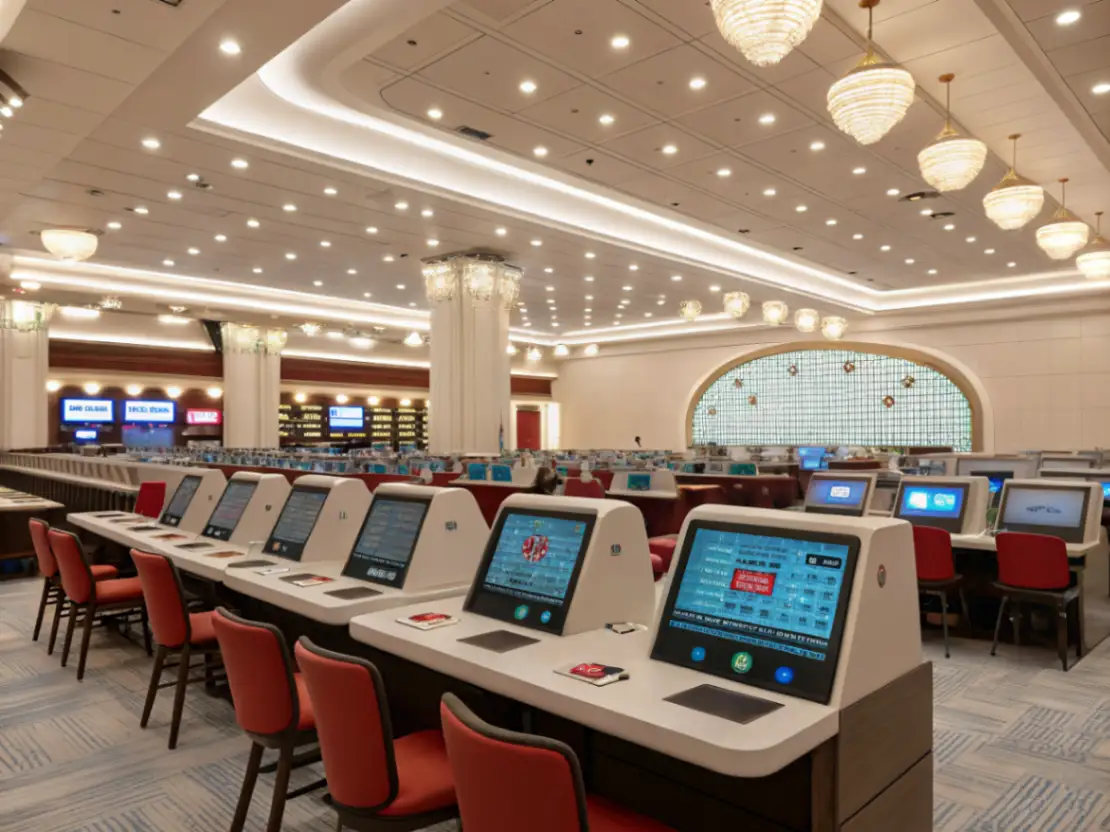
Bingo has always been built on trust. Players gather around numbers, waiting for luck to unfold in a transparent and social environment. Yet as the industry has moved online and hybrid formats have emerged, questions about fairness have become more frequent. Can outcomes be manipulated? Are draws truly random? And who verifies the system behind the scenes?
Blockchain technology enters this conversation as more than a buzzword. It offers a structural shift in how games are conducted, verified, and recorded. Instead of relying on a single operator’s integrity, blockchain distributes trust across a network. That change is subtle for players on the surface, but profound underneath.
What makes traditional bingo vulnerable
Classic bingo halls have long relied on mechanical systems or certified random number generators. While these systems are usually regulated and audited, they still operate within centralized frameworks. A single operator, or a small group of stakeholders, controls the infrastructure, data, and verification processes.
In land-based halls, the perception of fairness comes from physical visibility. Players can see the caller, the balls, and the pace of the game. However, this transparency has limits. Few participants understand the technical checks behind the scenes, and audits are often conducted periodically rather than continuously.
Online bingo platforms introduce another layer of abstraction. Random number generation becomes software-driven, and outcomes are produced by algorithms. Even if these systems are certified, players must trust that the operator has implemented them correctly and has not altered them.
The vulnerabilities typically appear in areas such as:
• Lack of real-time verification of results.
• Dependence on internal audits rather than public validation.
• Limited transparency in payout distribution.
• Centralized data storage that can theoretically be altered.
These concerns do not automatically mean manipulation is happening. However, they create an environment where doubt can exist, especially among experienced players who understand how digital systems can be modified.
How blockchain changes the rules of the game
Blockchain technology introduces a decentralized ledger where every transaction and event is recorded in a transparent and immutable way. In the context of bingo, this means that every number draw, every ticket purchase, and every payout can be logged on a system that no single entity controls.
The key difference lies in how trust is established. Instead of relying on the operator’s reputation or a regulatory body’s certification, blockchain allows players to verify outcomes independently. Once data is written to the blockchain, it cannot be changed without consensus from the network.
This structure creates a new standard for fairness. Random number generation can be linked to cryptographic algorithms that are publicly auditable. Each draw is recorded with a timestamp and a unique hash, ensuring that the sequence cannot be altered retroactively.
For players, this means that the game’s integrity is no longer hidden behind technical documentation or external audits. It becomes visible, traceable, and verifiable in real time.
The shift also impacts how operators approach accountability. Instead of proving fairness through reports and certifications, they demonstrate it continuously through transparent data.
Provably fair systems in bingo environments
The concept of “provably fair” gaming has gained traction in blockchain-based casinos, and bingo halls are beginning to adopt similar principles. A provably fair system allows players to confirm that each outcome was generated without manipulation.
In bingo, this process typically involves combining server-side and client-side inputs. A cryptographic seed is generated by the system, and players may contribute their own input, such as a random string. These elements are combined to produce a sequence of numbers that determines the draw.
What makes this system powerful is its verifiability. After the game, players can use the same inputs to reproduce the result independently. If the outcome matches, it confirms that no alteration occurred during the process.
This approach removes one of the biggest concerns in digital gaming: the hidden algorithm. Instead of trusting that the system is fair, players can prove it themselves.
It also introduces a level of engagement that traditional systems cannot offer. Players become active participants in the verification process, rather than passive recipients of results.
Transparency in payouts and player trust
Fair draws are only one part of the equation. Players also care deeply about how winnings are distributed. Blockchain technology addresses this by making financial transactions transparent and traceable.
Before introducing a comparative overview, it helps to look at how blockchain reshapes the financial side of bingo operations.
| Aspect | Traditional Bingo Systems | Blockchain-Based Bingo |
|---|---|---|
| Draw verification | Operator-controlled audits | Public, real-time verification |
| Data storage | Centralized servers | Decentralized ledger |
| Payout tracking | Internal accounting | Transparent transaction records |
| Tamper resistance | Limited by system access | High due to immutability |
| Player trust model | Based on reputation | Based on verifiable data |
This comparison highlights a fundamental shift. In traditional systems, trust is built through external validation and brand reputation. In blockchain-based systems, trust is embedded in the technology itself.
For players, this means greater confidence in both the fairness of draws and the accuracy of payouts. Every transaction can be tracked, and discrepancies become easier to identify.
Operators also benefit from this transparency. By demonstrating fairness openly, they can differentiate themselves in a competitive market where trust is a valuable asset.
Smart contracts and automation in bingo halls
Smart contracts are another key component of blockchain integration. These are self-executing programs that run on the blockchain and automatically enforce predefined rules.
In bingo halls, smart contracts can handle tasks such as ticket issuance, number draws, and prize distribution. Once the conditions are met, the contract executes without human intervention.
This automation reduces the risk of errors and eliminates opportunities for manipulation. There is no need for manual processing or approval, as the system operates based on transparent logic.
The use of smart contracts also streamlines operations. Players receive winnings instantly, without waiting for manual verification. This improves the overall experience and reduces friction in the gaming process.
From an operational perspective, smart contracts reduce administrative overhead. They handle repetitive tasks efficiently, allowing operators to focus on user experience and innovation.
Challenges and real-world adoption
Despite its advantages, blockchain integration in bingo halls is not without challenges. The technology is still evolving, and adoption requires both technical expertise and regulatory clarity.
One of the main barriers is user understanding. While blockchain offers transparency, it also introduces complexity. Not all players are familiar with cryptographic verification or decentralized systems. Simplifying the user interface becomes essential to ensure accessibility.
Regulation is another critical factor. Gambling laws vary across jurisdictions, and the use of blockchain adds new dimensions that regulators must address. Ensuring compliance while maintaining decentralization can be a delicate balance.
There are also technical considerations. Blockchain networks must handle high transaction volumes without delays. Scalability solutions, such as layer-two protocols, are becoming increasingly important in this context.
At the same time, early adopters are already experimenting with blockchain-based bingo platforms. These projects demonstrate that the concept is not theoretical. It is being tested, refined, and gradually integrated into real-world environments.
The direction is clear: as technology matures and user familiarity grows, blockchain is likely to become a standard component of fair gaming systems.
Conclusion
Bingo has always been a game of chance, but the way that chance is delivered is evolving. Blockchain introduces a new layer of transparency that changes how players perceive fairness. Instead of relying on trust alone, they gain the ability to verify outcomes themselves.
This shift does not replace the social and entertaining aspects of bingo. It strengthens them by removing doubts and reinforcing confidence in the system. Players can focus on the experience, knowing that the underlying mechanics are secure and transparent.
For operators, the challenge lies in adopting this technology in a way that enhances usability without overwhelming players. The balance between innovation and simplicity will define the next generation of bingo halls.
As the industry continues to evolve, blockchain stands out as a tool that aligns with the core values of the game: fairness, openness, and trust.